Wired, Wireless, and Cabinet-Ready: An INS Mining Network Case Study
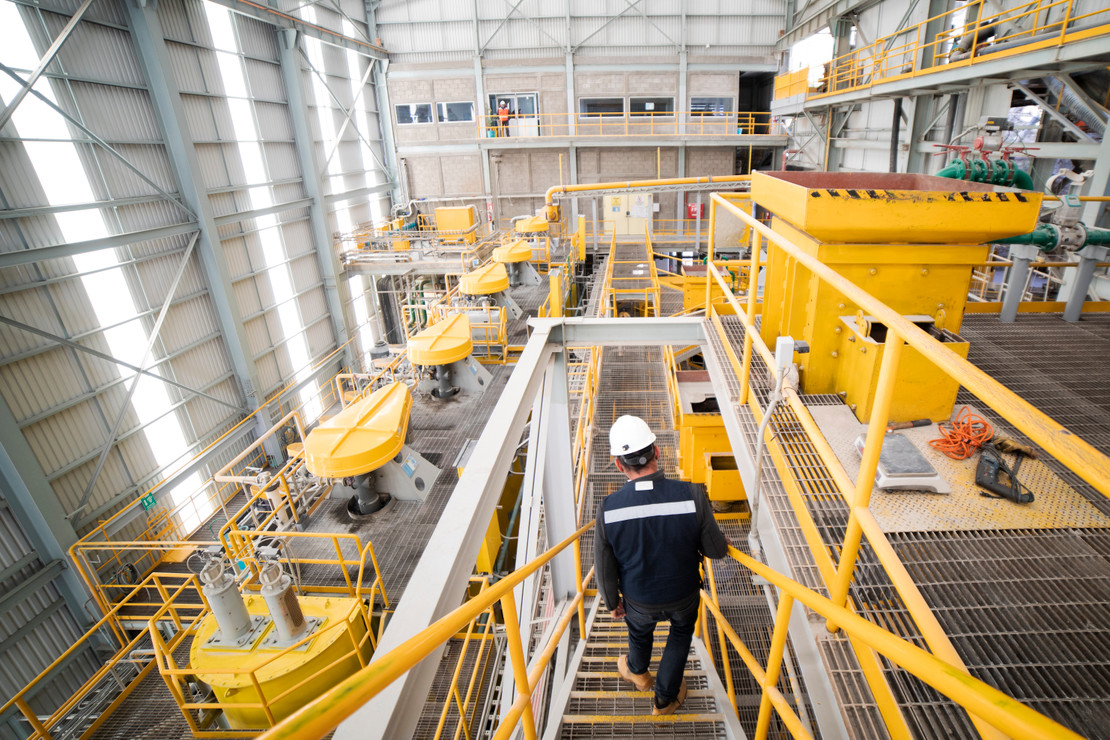
When an engineering firm needed an OT network for a mining facility, the hardware decision started with the people who would maintain it. The plant's distributed control system (DCS) already ran on Hirschmann switching, and the firm wanted every network switch on site to look and work the same way.
Our team at INS designed the network around Hirschmann GREYHOUND switches, engineered the network cabinets that house them, and coordinated the cabinet build with a local integrator. Here's how the project came together, and what it can mean for other industrial teams planning OT network design.
Why did the network need to match the control system?
The plant's DCS is an Emerson system, and the network switches that ship with it are Hirschmann hardware. Building the plant's separate OT network on the same Hirschmann switch family gave maintenance staff, field engineers, and technicians one familiar interface across both systems. What they already know from working on the DCS carries straight over to the rest of the plant network.
This allowed teams on site to use familiar interfaces, with similar menus, a consistent way of reading port status, and familiar tools to troubleshoot under pressure.
How did INS get involved with the project?
Our team had worked with this Emerson DCS before, and the vendor's team knew we were familiar with the Hirschmann brand. They recommended INS to this customer as a partner for the network design.
Why did that matter? The customer began the project with a network partner who already understood how the plant network and the control system would sit side by side, and who knew the hardware both would run on.
What hardware did we specify for this network?
The network was built on Hirschmann GREYHOUND switches, a family of 19-inch rack-mount managed industrial Ethernet switches and the newer generation of Hirschmann's earlier MACH series. Each network cabinet held at least two switches. Our team specified each one down to its ports, uplinks, media modules, power supplies, and fiber SFP transceivers. Wireless access points, firewalls, gateways, and power protection completed the design.
|
Component |
Role in the design |
|
Managed rack-mount switching for the OT network, at least two per cabinet |
|
|
SFP fiber transceivers |
Fiber optic ports on the switches |
|
Cisco wireless access points |
Plant wireless for mobile workers and laptops |
|
Network security |
|
|
Moxa gateways |
Gateway connectivity within the cabinets |
|
Housing for switches and supporting equipment |
|
|
Power, backup power, and power distribution in each cabinet |
|
|
DIN rail mounting components |
Mounting for smaller cabinet hardware |
Across the full project, that added up to more than a dozen network cabinets, 62 power distribution units, and more than 200 line items.
Planning an OT network around an existing control system? Let's talk through your design.
How were the network cabinets designed and built?
Our engineering team designed the network cabinets to the customer's specification. We then worked with a local integrator, who built the cabinets to that design.
For the engineering firm, the benefit was a single design owner. The same team that specified the switches, power, and security hardware also laid out the cabinets those parts would live in. Port counts, power draw, and physical space were planned together from the start.
Did this project include both wired and wireless?
Yes. Alongside the wired network, we supplied the hardware for the plant's wireless infrastructure, including Cisco wireless access points for mobile workers and laptops. The engineering firm sourced its wired backbone and its plant wireless from one partner, under one design.
How did INS keep pace with a strict timeline?
Projects like this are rarely cut and dried. Orders change. Designs change. And with more than 200 line items on staggered release dates, one change could touch several others.
Our team adjusted the design and the orders each time the customer asked, and kept the project moving toward its deadline. On a project like this, the engineering firm answers for the schedule. A network partner like INS, who tracks how each change moves through purchase orders and release dates, helps protect it.
What does this mean for other teams?
Engineering firms that need help with an OT network can bring us in at whatever point they need:
- Front-end design: network architecture and design before anything is ordered
- Cabinet builds: coordination with a local panel shop to build cabinets to spec
- CAD drawings: visual layouts of the network and of each cabinet, showing the components inside
- Wired and wireless hardware: sourced and specified as one design
We're already supporting this same engineering firm on a separate project at another facility. If your team is working on a mining or other industrial site and needs an OT network partner, we can start wherever your project is.
Have an OT network to design or network cabinets to spec?
Talk to an INS OT networking specialist →
FAQs
Why use the same switch brand on the OT network as on the DCS?
When the plant network and the control system use switches from the same manufacturer, maintenance staff and technicians can benefit from familiar management tools and operating conventions across both. In this project, the Emerson DCS ships with private-labeled Hirschmann switches, so the OT network was built on Hirschmann GREYHOUND switches to match.
What are Hirschmann GREYHOUND switches?
GREYHOUND is Hirschmann's family of 19-inch rack-mount managed industrial Ethernet switches. They're built for harsh industrial environments and offer configurable copper and fiber SFP port options. INS carries GREYHOUND switches and can help specify the right model for a cabinet design.
What goes into an industrial network cabinet design?
A cabinet design covers the switches and their ports, uplinks, media modules, and fiber transceivers, plus power supplies, UPS systems, PDUs, enclosures, and any security or gateway hardware. INS can also provide CAD drawings showing the network layout and each cabinet's components.
Does INS build network cabinets?
INS engineers design network cabinets to the customer's specification and coordinate the build with a local panel shop or integrator. On this mining project, a local integrator built the cabinets to INS's design.
Can INS design both wired and wireless industrial networks?
Yes. INS supplies and specifies hardware for wired OT networks and for plant wireless infrastructure, so both can be planned as one design.
Does INS work with engineering firms on OT network projects?
Yes. INS supports engineering firms with front-end OT network design, cabinet design and build coordination, CAD drawings, and hardware sourcing across multiple purchase orders and release dates.
Related Case Studies
How Industrial Networking Solutions Helped a Food Manufacturing Facility Scale from Startup to Industry Leader · Network Upgrade for Aggregate and Quarry Facilities
About the Authors
 |
Adam Daniel, Product Director · Benjamin Pompa, Territory Account Manager Adam Daniel is Product Director for Industrial Networking & Industrial Cable Connectivity Solutions at INS, where he focuses on partner engagement and product adoption across the company’s industrial Ethernet and connectivity lines. He first joined INS in 2006 and spent most of his career in regional sales across the Southwest and Gulf Coast, working with customers on the industrial Ethernet behind DCS, SCADA, and PLC networks. Before INS, he worked in IT and telecommunications support. Adam holds a B.S. in Communications from East Central University.
|

 |
Benjamin Pompa, Territory Account Manager Benjamin Pompa is a Territory Account Manager for Industrial Networking Solutions, covering the Houston Gulf Coast region. He brings nearly two decades of account management and sales leadership experience, including roles with Verizon Business and Verizon Wireless, to helping industrial and energy customers modernize their field connectivity.
|