Rodents, Remote Land, and the Case for Going Cellular
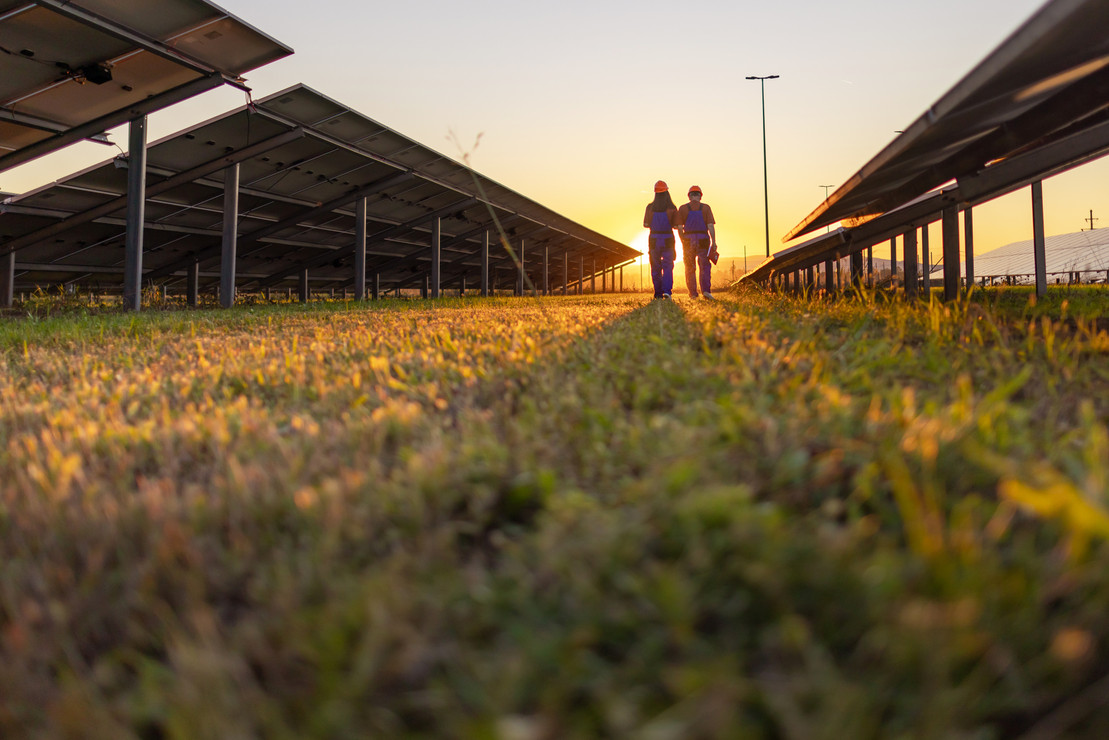
Utility-scale solar has a geography problem.
The economics of large solar installations demand open land, flat terrain, and unobstructed sun exposure. What that typically means in practice is remote, rural acreage — land that was often formerly used for agriculture, may still be used that way, and almost certainly doesn't come with a fiber drop to the property line.
For a manufacturer of solar tracking systems and inverters deployed across fields like these, that geography problem was also a connectivity problem. Their trackers needed remote access for break-fix support and a reliable path to bring operational data back to a central location. The question wasn't whether they needed cellular — it was how to deploy it right, at scale, without the kind of headaches that come from inexperience.
That's where INS came in.
The Right Hardware for the Environment
This customer's first requirement was straightforward but non-negotiable: the hardware had to work. Rural solar installations expose networking equipment to wide temperature swings, dust, and the kind of sustained conditions that separate industrial-grade equipment from everything else quickly.
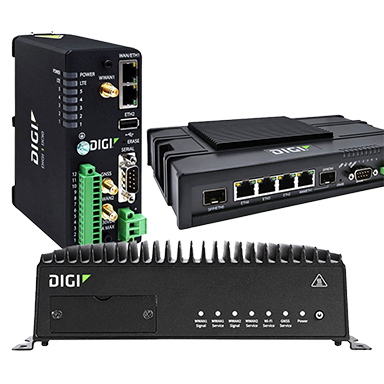 |
We recommended Digi International's cellular routers, which are purpose-built for these environments. What made Digi the right call for this specific customer, though, went beyond ruggedization. The customer had a clear preference: they didn't want to rely on a cloud-based management platform. They wanted to use the command line interface to access and manage their hardware directly. |
Digi is one of the few cellular router manufacturers in the industrial space with a well-documented, robust CLI — and for a customer who knew how they wanted to operate, that was a deciding factor.
A Problem Nobody Talks About (Until It Costs Them)
Solar fields deployed on former or active agricultural land share a common, persistent problem that doesn't show up in spec sheets: rodents.
The instinct when wiring a large installation is to run data cables alongside power cables. But agricultural environments attract rodents with an affinity for chewing through data cables. The result is a failure that's difficult to locate, labor-intensive to repair, and potentially avoidable.
Through experience across industries — including oil and gas deployments with similar remote-site challenges — INS has learned to think ahead of these problems. The recommendation here was straightforward: go cellular and keep data cables inside enclosures at each panel or back at the main station, where rodents can't reach them. Eliminate the exposure point entirely.
More Than a Hardware Sale
The relationship we have with Digi was a key part of how this project came together. Digi was looking for a partner who could do more than drop-ship modems — they needed someone who could wrap the full solution around the hardware and deliver it ready to deploy.
That's a core part of what INS does. The modems don't arrive in a box and get handed off. They arrive configured, provisioned, installed in enclosures, powered, and validated, with essential components (DIN rail, breakers, power supply) sourced and assembled as part of a complete package. When the customer's integration team receives the shipment, the hardest work is already done.
Cellular provisioning is one area where that experience especially matters. While SIM activation sounds straightforward, it rarely is. Carriers have their own processes, their own timelines, and their own ways of making things complicated when something goes sideways. INS maintains working relationships with carrier reps, stocks the SIMs that go into Digi hardware, and manages the provisioning process from activation through pre-ship validation. Devices are confirmed live on the network before they ever leave the facility.
That’s the difference between a smooth rollout and a field team chasing activation problems across dozens of remote sites.
What This Project Says About INS
Solar is one of the fastest-growing deployment environments for industrial cellular connectivity, and it brings all the same challenges as other large-scale remote infrastructure: difficult terrain, limited wired access, demanding physical conditions, and the operational need for reliable data and remote management. INS has worked across enough of those environments to bring a comprehensive perspective to projects like this one.
Looking for a connectivity partner who can handle the whole project? Contact INS to talk through your deployment.
About the Author
Matt Klabnik, Sales Engineer
 |
As a Sales Engineer at INS, Matt helps industrial and enterprise customers turn complex connectivity challenges into practical, working solutions. With more than a decade of experience in solutions and sales engineering, including eight years at a major carrier, Matt specializes in private cellular networks and next-generation 5G technologies. He holds a degree in Electrical and Computer Engineering from Clarkson University and believes the best technical conversations still start with a whiteboard and a marker.
|