On the Right Track: How INS Supports One of America's Largest Railroads
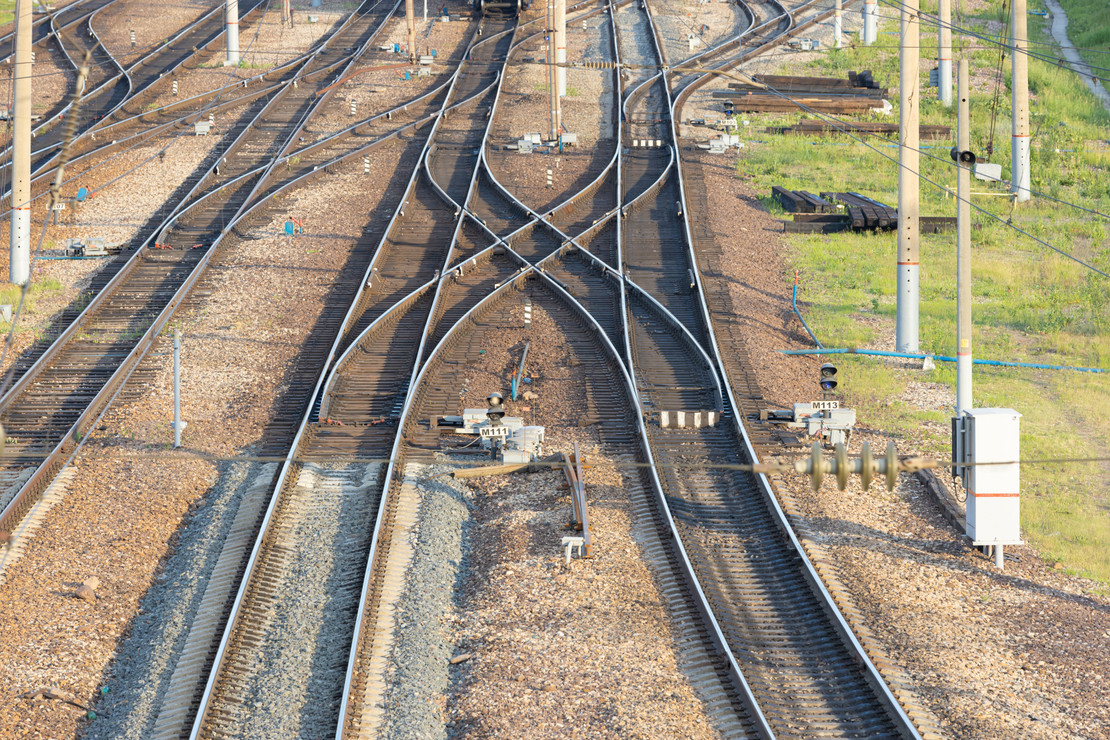
The railroad industry runs on precision—and increasingly, on data. Real-time location tracking, remote monitoring, operational visibility across hundreds of miles of active track: the demands on modern rail networks have grown far beyond what legacy infrastructure was ever designed to handle.
One of the country's largest railroads recognized that gap early. Their solution was to find a partner who could help them close it.
More Than a Customer — A Trusted Partner
I've been with INS for about a year, and one of the first things I learned when I came on board was that this railroad customer isn't just an account—they're a partnership that INS has been earning for years.
These aren't the kind of customers who call with a part number and a credit card. They call us and say, "Hey, we've been doing things this way for a while. Is there a better way to do it?" And then we work through it together. That dynamic is something I've come to really appreciate.
Technology in this industry has changed so much, so fast, that even a company this size can't afford to have their head down. They're constantly evaluating whether the way they've been doing things is still the right way to do things going forward. And they trust INS to help them answer that question.
The Challenge: Getting Data from the Field to the Operations Center
One example of that relationship in practice is figuring out how to bring data from trackside equipment and active locomotives back into their central operations center. That’s not a simple problem ever, but especially at rail scale.
The answer wasn't one technology. We incorporated multiple manufacturers to build out a solution that brought together traditional industrial networking, cellular, and satellite—Semtech, Ericsson, and Starlink among them. Each one plays a specific role in the overall architecture, and together they give this railroad the kind of connectivity to support the connectivity this railroad relies on for safe, efficient operations.

Safety First: Keeping People & Equipment Out of Harm's Way
One of the applications I'm most proud of being a part of involves trackside equipment monitoring.
Here's the problem: when a piece of maintenance equipment is traveling on active track, everyone else operating in that area needs to know exactly where it is. If a train doesn't know that equipment is on the track ahead of it, you're looking at a potential collision, which is a risk to both your people and your equipment.
That's where we recommended the Semtech RX55. It’s installed on each piece of mobile equipment and communicates with compatible equipment within range, helping provide a clear picture of where equipment is on the track. The visibility it provides is what makes it such an important part of this solution. Plus, it's built tough enough to handle whatever the field throws at it, whether that's in a harsh outdoor environment or mounted in the cab of a vehicle.
Over the next several years, we'll be rolling out hundreds of these devices across their fleet. It's a multi-year implementation, but when it's done, they'll have broad visibility across their operation and a much stronger foundation for supporting safety-focused operations.
The Question That Keeps Coming Up: Future-Proofing
If there's one thing that comes up in almost every conversation I have with this customer, it's future-proofing. The 4G-to-5G transition is a real, active concern for a railroad operating at this scale. Equipment deployed today needs a clear path forward as networks evolve. They can't afford to be locked into technology that's at risk of becoming obsolete in five years.
The good news is that the manufacturers we work with offer technologies built with that path forward in mind—and that’s not an accident. INS has built those relationships intentionally, so that when a customer like this one asks "What does this look like in five years?", we can give them a real answer.
We're not just solving for today. We're designing for where they're going tomorrow.
Why This Customer Calls INS First, Every Time
What I keep coming back to when I think about this customer is that they don't just look at us as a place to buy hardware. They rely on us before the sale: comparing options, evaluating features and helping them build the case for a technology before they commit to it. And they rely on us after the sale, too. When something goes wrong in the field, we're the first call. We have engineers ready to troubleshoot, and when something needs to be escalated or replaced, we can move quickly because of the relationships we have with the manufacturers we work with.
We cover the track between the end user and the manufacturer so nothing goes off the rails. And as this railroad continues to expand their network, add devices, and plan for the 5G transition ahead, that's exactly where we'll be—right there with them, for whatever comes next.
All Aboard — Let's Build Your Network
Author: Taylor McGaughey, Territory Account Manager