EV Charging Station Connectivity: How INS and Digi Ended the Guesswork for a Global Company
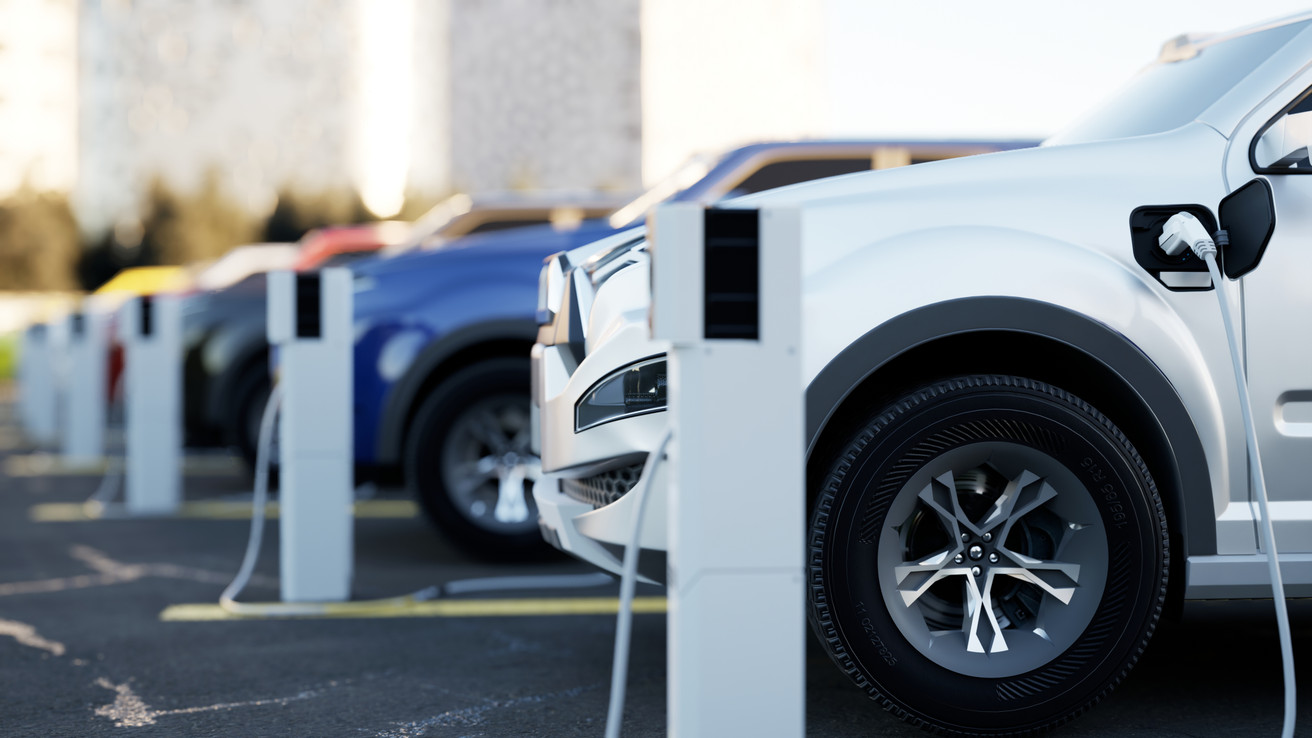
Every EV charging station needs a constant, secure connection back to the cloud for billing, monitoring, remote diagnostics, and payment processing. But, most of the businesses installing those chargers aren’t network technicians — they’re hotel owners, property managers, and electrical installers who’ve never had to think about routers, antennas, or cellular failover. That’s why many improvised connectivity approaches can create challenges in the field.
I've walked enough customers through a failed setup to know the pattern by heart: a manufacturer hands over a parts list, an installer does their best with what's available, and a few months later a connection drops and nobody on-site knows how to fix it.
Why Do EV Charging Stations Need Dedicated Network Connectivity?
EV chargers require bidirectional communication with a cloud platform to function as more than a piece of hardware. That connection handles usage tracking, remote monitoring, and in some cases, billing systems. The problem is, businesses buying and installing this equipment are rarely equipped to manage that connectivity themselves.
What About Guest Wi-Fi?
In practice, guest Wi-Fi is not well suited for EV charging deployments — and we’ve seen teams learn that the hard way. Properties that tried routing chargers through existing guest Wi-Fi ran into bandwidth constraints, security gaps, and connections that simply couldn’t be reached reliably from an outdoor charging location.
Other attempted fixes fared no better:
- Consumer-grade routers and access points — not built for outdoor, 24/7 industrial use, and prone to failure once exposed to weather and continuous operation
- Wi-Fi range extenders — attempts to stretch an indoor network out to an outdoor charger introduced new points of failure rather than solving the original one
These approaches can add complexity without delivering the level of reliability required for a given deployment. That pattern, repeated across enough customers, is what drives companies to look for a purpose-built solution rather than another piecemeal fix.
INS partnered with Digi to close that gap for a global EV charging equipment manufacturer. Here’s how we did it.
Introducing the EV Charging Connectivity Kit
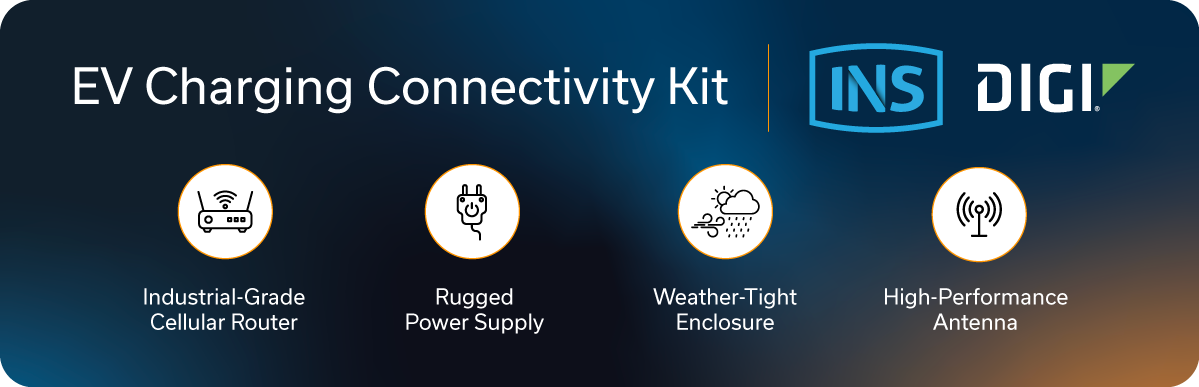
Working in partnership with Digi, we built a pre-assembled hardware package designed to remove the guesswork for installers. Rather than sourcing and configuring components separately, the kit ships as a single, tested unit that includes:
- An industrial-grade cellular router, built for the connectivity demands of a commercial charging deployment
- A power supply built for the conditions of an outdoor charging site
- A weather-tight enclosure to protect the equipment outdoors
- A high-performance antenna
INS’s team assembles, configures, and tests each kit before it ships — so the electrician installing it is connecting pre-built, verified hardware rather than troubleshooting on-site.
Dedicated Network vs. Shared Wi-Fi: What’s the Difference?
| Guest/Shared Wi-Fi | Dedicated EV Charging Network | |
|---|---|---|
| Reliability | Subject to congestion from other users | Isolated, consistent connection built for one purpose |
| Security | Shares exposure with general guest traffic | Standalone network, separate from guest systems |
| Hardware | Consumer-grade, not for outdoor/industrial use | Industrial cellular router in a weather-tight enclosure |
| Support | No dedicated support path | End-to-end management and helpdesk |
| Cost Predictability | Variable, usage-dependent | Consistent monthly model, budgetable over a 3-year term |
Beyond the Kit: What Keeps It Running
A connectivity kit is the first part — but what actually keeps an EV charging deployment running is everything wrapped around it.
A more predictable connectivity budget.
Cellular connectivity has a reputation for surprise bills — one heavy-usage month and suddenly the math on a charging deployment looks different. Because the usage pattern for this kit has been tested in the field, that variability lessens. It’s offered on a three-year operational model, designed to provide more predictable costs and support longer-term budgeting.
An install day, not an install detour.
The kit shows up assembled, configured, and tested: router, power supply, enclosure, and antenna already working together before it ever leaves INS. The electrician on-site installs the pre-configured unit — no networking background required, and no configuration guesswork on site.
A real person to call when something breaks.
This is the part most connectivity setups skip entirely. INS manages the service layer, not just the hardware sale, so connectivity or covered hardware issues can be directed to INS’s support and helpdesk team. The property owner has access to INS support rather than having to troubleshoot connectivity issues independently.
Talk to INS About EV Charging Connectivity
If you're installing or managing EV charging stations and need a connectivity solution that doesn't require an in-house networking team, contact INS to learn more about the INS and Digi connectivity kit.
FAQs
Do I need a networking background to install this?
No. The kit is designed for installation by a licensed electrician. All configuration and testing happens before it ships.
Is this connectivity separate from my property's guest Wi-Fi?
Yes. Dedicated connectivity is a deliberate design choice — it can reduce exposure to bandwidth constraints and help separate charging connectivity from guest-network traffic.
What's included in the hardware kit?
An industrial cellular router, a weather-tight enclosure, a high-performance antenna, and an industrial-grade power supply — all pre-assembled and tested by INS before shipment.
How is this priced?
As a consistent monthly connectivity package, typically structured around a three-year operational model for predictable budgeting.
What if something breaks after installation?
INS provides ongoing connectivity support and helpdesk services during the applicable service term — not just a one-time equipment sale.
Can I build this myself instead of buying the kit?
Some customers have tried — using consumer routers, range extenders, or existing guest Wi-Fi. In practice, these approaches can introduce reliability challenges and additional network-security considerations that a purpose-built industrial kit is designed to avoid.
 |
About the AuthorJohn Schissel, VP of Carrier Engagement John Schissel is VP of Carrier Engagement at INS, where he leads carrier and connectivity partnerships across the company's IoT and industrial networking portfolio. He's spent more than two decades building carrier relationships in wireless and cellular sales, including as President of Source Inc. since 2004 (now part of INS) and earlier roles at Sprint and U.S. Cellular. Based in the Kansas City area, John works directly with carrier partners like Verizon, AT&T, and T-Mobile to keep INS's connectivity solutions running on infrastructure that scales with demand.
|