Turning Fragmented Fields into Full Visibility
How One Oil & Gas Operator Took Control of OT Cybersecurity
Growth is a good problem to have…until your infrastructure can’t keep up.
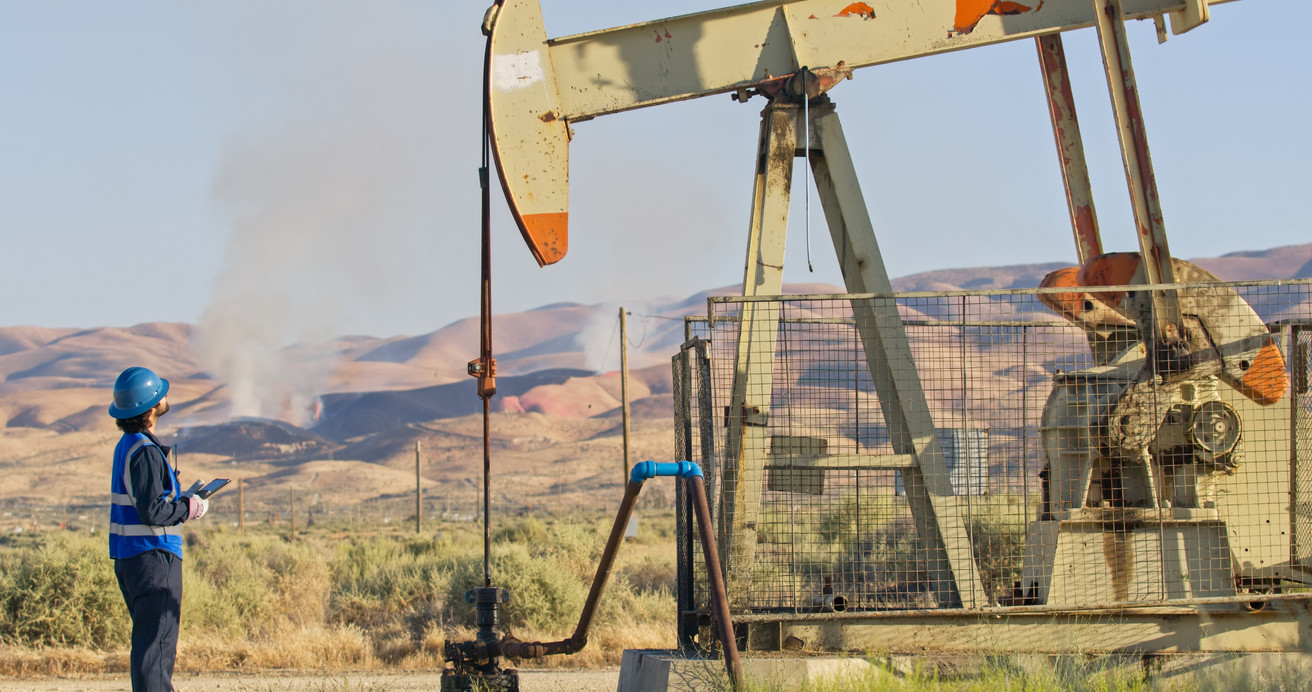
For one oil and gas operator expanding across the Permian and into other regions of the U.S. and Canada, that’s exactly where things started to break down.
New assets were coming online fast. But across those sites, their devices, configurations, and networks looked different. There was no consistent view of what existed in the field, no clear way to quantify risk, and no scalable way to strengthen their security posture.
At the same time, expectations were changing. Cybersecurity frameworks were becoming more relevant, and the pressure to understand and better protect industrial environments was only increasing.
The Search for Cybersecurity Started with a Visibility Gap
The conversation didn’t begin with “we need better security.” It started with something more practical.
This customer was looking for a solution partner that could help get a new project off the ground and, just as importantly, work across both sides of their organization. They needed support at the IT level, but they also needed someone who understood what was actually happening out in the field with OT.
What looked good on paper didn’t always translate to remote oilfield environments, and vice versa. As those early conversations unfolded, one thing became clear pretty quickly: before they could improve anything, they needed a better handle on what they had.
The Real Issue: No Clear View of the Environment
As the team dug deeper, the visibility problem came into focus.
There were assets across the field, but no consistent way to identify or quantify them. Devices had been deployed over time, often differently from site to site. And without that consistency, there was no reliable way to understand how systems were communicating or where potential risks might exist.
That’s when the conversation naturally expanded. Not because they set out to find a cybersecurity tool, but because once you realize you don’t have visibility, security becomes part of the equation whether you planned for it or not.
Exploring Solutions That Could Actually Work in the Field
This company looked at several platforms trying to determine which one could realistically fit their environment. That meant whatever they chose needed to scale across remote sites, integrate with what they already had, and not introduce a bunch of additional complexity.
At this point, Cisco Cyber Vision started to stand out. Not because it added something new, but because it worked with what was already there.
Rather than requiring separate hardware to monitor network traffic, Cyber Vision could run directly on the industrial Ethernet switches H&P was already standardizing on, including the Cisco IE-3300, IE-3400, and IE-3500 series. This gave the switches a dual role: supporting the network infrastructure while also collecting traffic data and forwarding it for analysis.
No extra infrastructure. No duplicated effort. Just more capability out of the existing environment.
Rolling Out the Network Across Remote Sites
Choosing the solution was only half the battle. Deploying it across multiple remote locations (each with different conditions and limited on-site support) was where things could easily fall apart.
So instead of pushing that complexity into the field, INS pulled it into the lab.
Switches were configured ahead of time using files provided by the customer. Everything was tested, validated, and standardized before it ever left the building. Then it was shipped directly to each site, ready to be installed. Field teams weren’t stuck troubleshooting configurations, and could instead focus on getting systems up and running.
What They Could Finally See and Why It Mattered
Once everything was deployed, the difference was noticeable right away. For the first time, this customer could actually see what existed across their environment without having to send teams out to physically inspect each site.
They could identify and quantify assets and understand how systems were communicating. And from there, they could start making informed decisions. Beyond gaining insight, they gained a more consistent way to manage their environment.
And along the way, they ended up with stronger cybersecurity capabilities than they originally set out to achieve.
Now, instead of trying to catch up with growth, they’re better positioned to support it. New assets can be brought online within a consistent framework. Visibility is incorporated from the start. And security isn’t something layered on later; it’s just part of how the environment operates.
Our customer has moved beyond a collection of disconnected sites. They have a connected system that’s built to scale.