How INS Helped Scale Smart Safe Connectivity Across 12,000+ Deployments

Some projects start with a purchase order. This one started with a problem that was quietly costing a global company real money, and getting worse the faster they grew.
If you’ve ever used a smart safe or cash recycler at a bank, a retailer, or a business, there's a good chance this customer’s technology was behind it. Their job is to make cash handling smarter, more secure, and more efficient for businesses of every size. Our job became helping them support their technology more consistently, at scale, across thousands of locations nationwide.
The Problem Wasn’t the Hardware. It Was the Network.
When this customer came to us, they weren't struggling with their devices. They were struggling with what happened when those devices needed attention.
Because third-party network access to smart safes and cash recyclers was restricted, their IT team had no way to connect to a deployed unit remotely. Every time something needed to be diagnosed or fixed, it had to be resolved by an on-site technician. Those truck rolls added up fast: in cost, in time, and in strain on a small operations team that was already managing a lot.
At the same time, they were pushing hard to grow their market share of smart safe customers. That meant more deployments, more locations, more units to manage. The issue? Their existing process wasn't built to scale at that pace.
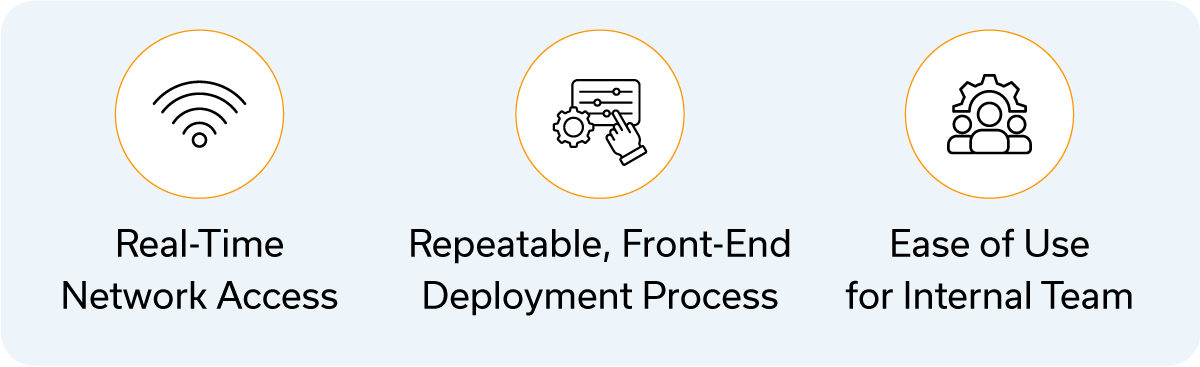
Three things needed to change:
- Get real-time network access to deployed devices so remote diagnostics were actually possible
- Build a front-end deployment process that was consistent, repeatable, and fast enough to keep up with growth
- Do all of it without overwhelming a lean internal team
From Vendor to Extension of Their Team
When we looked at what the customer actually needed, it was clear that a product sale wasn't going to solve this. They needed a partner who could own a piece of their operation.
That's what we built.
Working alongside Semtech (formerly Sierra Wireless) and Verizon, we deployed Verizon LTE for direct internet access across safe locations, giving their team real-time visibility into devices they previously had to visit in person. That connectivity change alone was a significant shift in how they could operate.
But the bigger lift was on the operational side. We assigned dedicated resources to this account for the full duration of a multi-phase project and took ownership of the things that were slowing them down:
- Strategic Partner Account Management — keeping INS, Semtech, and Verizon aligned and moving in the same direction
- Project Management — owning the deployment process end to end
- Activation Coordination — activating, provisioning, configuring, testing, labeling, staging, and kitting every unit before it shipped
- Inventory & Logistics Management — organizing shipments around customer commitments, not the other way around
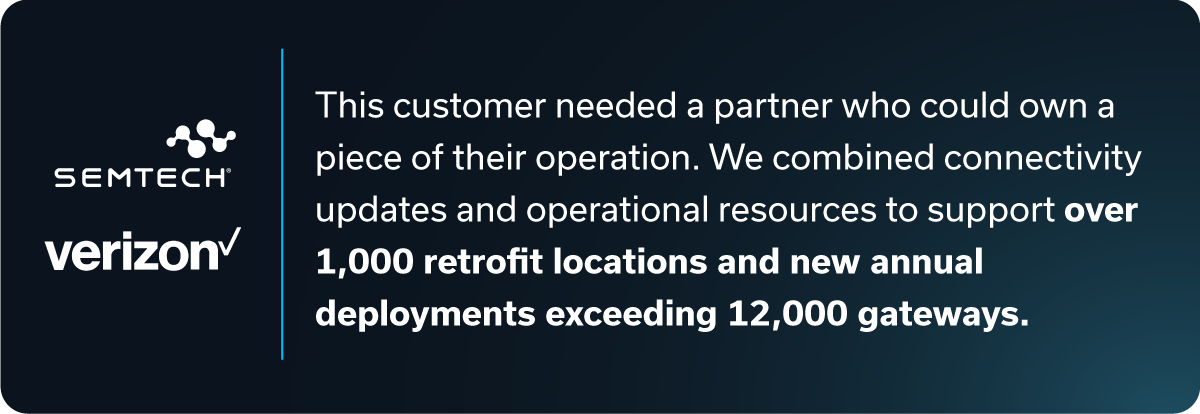
At peak, we were deploying up to 1,200 units per month. By the time the program was fully in motion, it had grown to support over 1,000 retrofit locations and new annual deployments exceeding 12,000 gateways.
Learn more about our enterprise connectivity services here
What Changed for Our Customer
The results showed up in places that matter most to a business: operations, costs, and customer experience.
With Verizon LTE connectivity in place, they could gain improved real-time visibility into supported deployed devices. That data access meaningfully changed how they managed support. Instead of relying primarily on reactive support, they could use device data to identify issues earlier and schedule service more proactively (rather than dispatching a truck after something broke). Reducing truck rolls helped lower support costs, with the potential for those efficiencies to benefit their end customers as well.
Beyond operations, the program gave them the infrastructure it needed to grow. With a more scalable, cellular-first deployment process in place, they were in a better position to support new smart safe customer deployments and faster onboarding, and they reported year-over-year market share growth.
The people using their cash management technology at the business level noticed the difference too. Improved data access, faster issue resolution, and more consistent service support from the devices they depend on every day.
The Part We’re Most Proud Of…
We're proud of the scale of this project. But the part we're most proud of is simpler than that: they trusted us to be part of their team, and we delivered on that.
That's the standard we hold ourselves to on every engagement. Not just getting the hardware out the door, but understanding what a customer actually needs to succeed and building around that.
When connectivity is business-critical, there's no room for a vendor relationship. You need a partner.
If you're managing distributed devices, equipment, or assets across multiple locations, and you're dealing with unpredictable support costs, visibility gaps, or a deployment process that can't keep up with your growth, we'd like to talk.
Author: Richard Rogers, CEO, INS