
Technologies
Cable, Connectivity and Hardware
Reliable Network Infrastructure Engineered for Demanding Environments
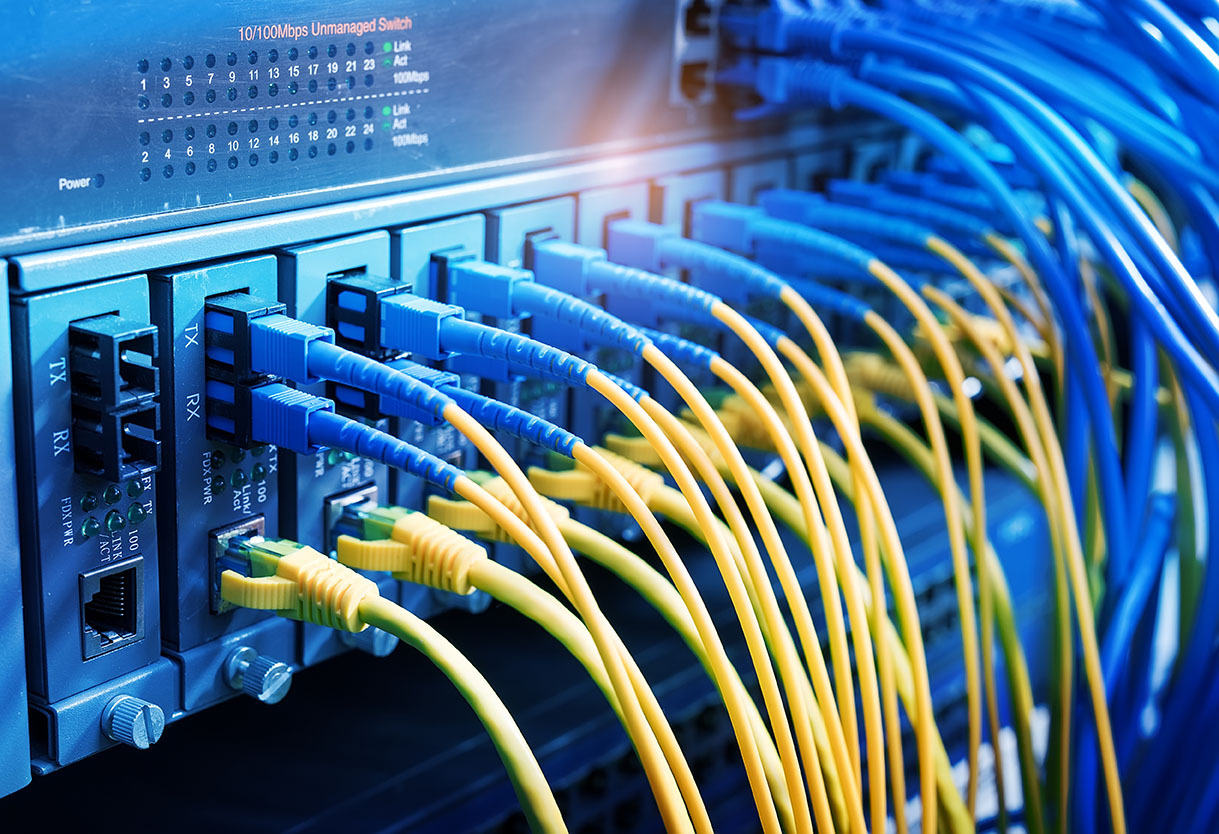
A dependable industrial network begins with the right physical foundation. Cables, connectors, patch panels, racks, enclosures, and power systems form the backbone of network reliability, directly impacting performance, uptime, and long-term scalability. In demanding environments, office-grade infrastructure is often not enough.
Industrial network cabling and connectivity hardware are engineered to withstand heat, dust, vibration, moisture, and electrical noise while supporting high-bandwidth applications and future expansion. When designed and installed correctly, this infrastructure enables reliable operation for control systems, enterprise data, video, and remote access technologies.
Industrial Networking Solutions designs and delivers industrial-grade cable and connectivity solutions that support reliable, maintainable, and future-ready network architectures across enterprise and industrial environments.
What Counts as Connectivity and Hardware
Industrial connectivity and hardware include all of the physical components that carry and protect network signals throughout a facility.
This includes industrial ethernet cabling, fiber-optic cabling, connectors, patch panels, network racks, cabinets, enclosures, DC power systems, and UPS battery backup platforms. These components are designed to work together as a structured cabling system that supports consistent performance, simplified maintenance, and long-term scalability.
What makes these components industrial is their ability to survive harsh conditions. Compared to standard office-grade infrastructure, industrial cabling and hardware offer stronger jacketing, improved shielding, vibration resistance, chemical tolerance, and protection against electromagnetic interference.
Because physical infrastructure underpins every network layer, many reliability issues trace back to poor cable selection, improper installation, inadequate grounding, or insufficient power protection rather than failures in switches or routers.
Typical Components and Options
Industrial network infrastructure includes several key component categories:
Shielded copper options such as Cat6A and Cat7 support high-speed data and Power over Ethernet in harsh environments. Fiber-optic cabling is often used for long distances, electrically noisy areas, or where lightning and grounding concerns make copper impractical.
Rugged patch panels, DIN-rail or panel-mounted terminations, shielded connectors, and bulkhead fittings provide reliable signal integrity while simplifying maintenance and future expansion.
IP-rated racks and enclosures protect active and passive infrastructure from heat, dust, moisture, and unauthorized access across plant floors, outdoor sites, and remote installations.
Proper routing, separation of power and data, labeling, and capacity planning support easier troubleshooting, cleaner expansions, and long-term maintainability.
Stable power is critical to network reliability. Industrial DC power supplies deliver regulated, high-efficiency power to switches, routers, and edge devices, while UPS systems maintain uptime during outages and voltage disturbances. Properly sized and engineered power and backup systems protect network infrastructure from brownouts, surges, and unexpected shutdowns that can disrupt operations or damage equipment.
Industrial Ethernet Cabling
Connectivity Hardware
Network Racks, Cabinets, and Enclosures
Cable Management and Infrastructure Planning
DC Power Systems and UPS Battery Backup
Why Proper Connectivity Infrastructure Matters
Reliable connectivity infrastructure directly affects network uptime and operational continuity. Industrial-grade cabling reduces failures caused by environmental stress, interference, and mechanical wear that commonly disrupt standard cabling systems.
Performance and scalability are also improved. Proper cable selection supports higher data rates, Power over Ethernet, video traffic, and future protocol requirements without costly rework. Structured cabling and organized patching make it easier to expand or modify the network as operations evolve.
Maintainability is another critical benefit. Clearly labeled cables, organized racks, and standardized patch panels simplify troubleshooting, upgrades, and diagnostics, reducing downtime and maintenance effort.
In regulated or industrial environments, proper cabling and hardware also support customer compliance and safety requirements. Environmental ratings, shielding, and standards-based installation practices help reduce risk and ensure long-term reliability.
Best Practices for Industrial Cabling Deployments
Successful cabling deployments begin with TIA standards-based design. Environmental classifications, shielding requirements, and jacket materials should be selected based on real operating conditions rather than assumptions.
Installation quality is critical. Certification and testing after installation verify continuity, shielding integrity, length, and signal performance, helping prevent intermittent failures that are difficult to diagnose later.
Designing for future growth reduces long-term cost. Planning spare capacity, additional pathways, modular rack space, and expansion ports ensures the infrastructure can support future applications without disruption.
Component selection should always account for the environment. Temperature extremes, vibration, chemical exposure, and EMI all influence cable, connector, enclosure, and power-supply choices.
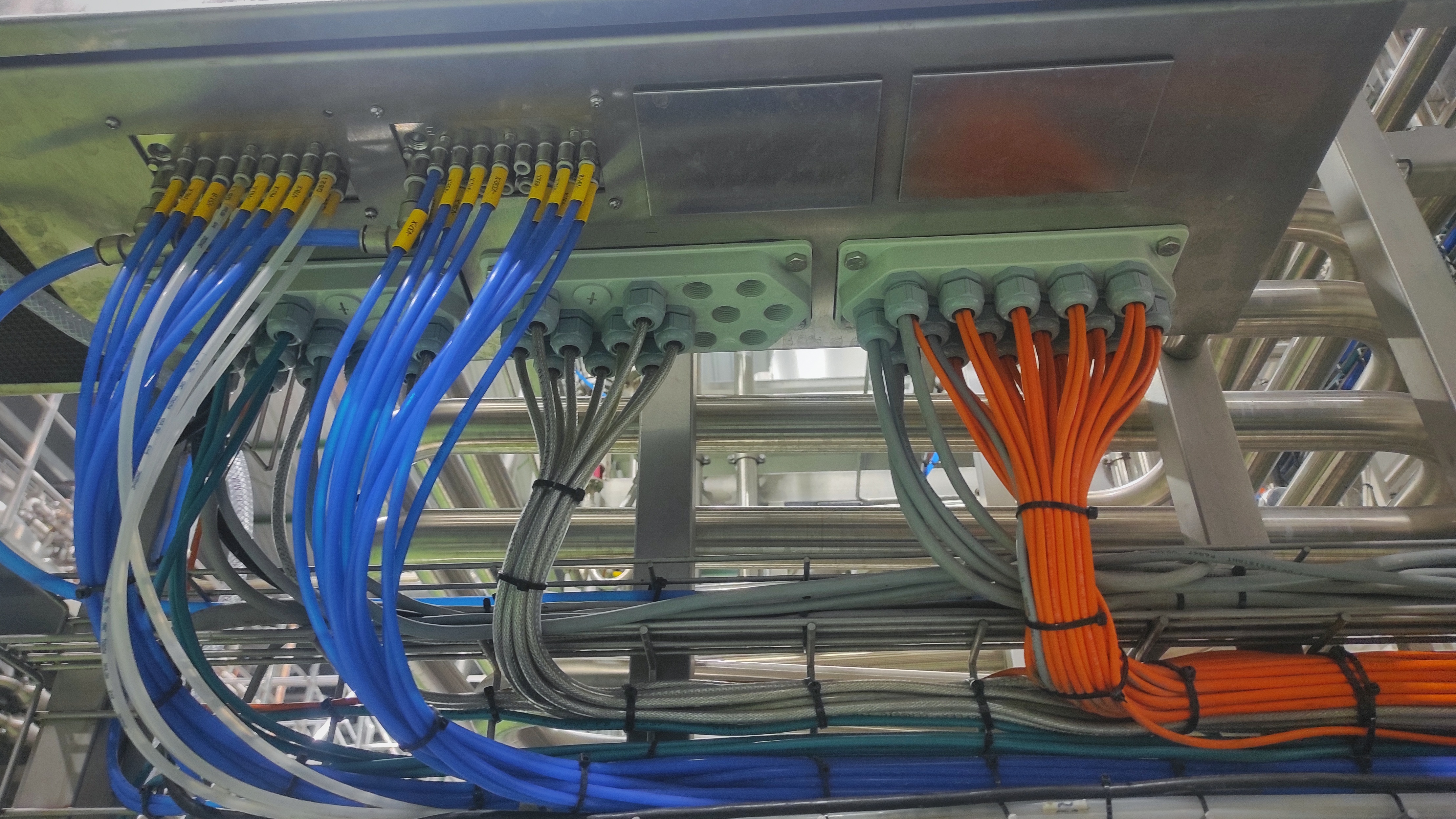
Why Cabling Infrastructure Should Never Be Overlooked
Why Cabling Infrastructure Should Never Be Overlooked
Poor infrastructure increases maintenance cost, creates safety risks, and limits the ability to scale or modernize the network. Over time, the cost of rework and outages far exceeds the investment in proper industrial-grade infrastructure.
Well-designed and properly installed cabling delivers long-term value by improving reliability, simplifying maintenance, and supporting future technologies without disruption.
How INS Provides Cable, Connectivity, and Hardware Solutions
INS delivers industrial connectivity infrastructure as a coordinated solution rather than isolated components.
Featured Manufacturers and Hardware Partners
INS works with proven industrial connectivity manufacturers selected for quality, durability, and long-term performance.

Belden provides trusted industrial ethernet and fiber cabling designed for harsh environments and demanding applications.
Learn More

Corning delivers high-quality fiber-optic cable and connectivity solutions for long-distance and high-performance industrial networks.
Learn More

Rittal supplies robust racks and enclosures designed to protect network infrastructure in industrial and controlled environments.
Learn More

APC by Schneider Electric provides uninterruptible power supply systems and power distribution solutions that protect network infrastructure from outages, surges, and power instability.
Learn More

PULS manufactures industrial-grade DIN-rail power supplies designed for high efficiency, long service life, and reliable performance in demanding environments.
Learn More

Optical Cable Corporation specializes in rugged fiber-optic cabling engineered for industrial, enterprise, and mission-critical network deployments.
Learn More
These partners allow INS to deliver reliable, standards-based infrastructure without locking customers into a single vendor ecosystem.
Related Case Studies
Explore real-world examples where properly engineered cabling and connectivity infrastructure played a critical role in reliable industrial and enterprise network deployments.
Ready to Build a Reliable Network Foundation?
INS can help you design and deploy industrial-grade cabling and connectivity infrastructure that delivers reliability, scalability, and long-term value.