What is a POTS Line?
January 28, 2026
A Complete Guide to Plain Old Telephone Service
Plain Old Telephone Service (POTS) has been the backbone of voice communication for more than a century. Long before broadband, cloud collaboration tools, VoIP phones, and cellular networks, POTS lines were the standard way homes and businesses connected to one another.
Today, many organizations still rely on POTS lines for critical systems like fire alarms, elevators, security panels, fax machines, and point-of-sale terminals, even as telecom carriers continue phasing out the copper network that makes POTS possible.
Understanding what a POTS line is and how it works is crucial for businesses planning infrastructure upgrades, network modernization, or compliance with evolving telecom regulations. In this guide, you’ll learn:
- The definition and meaning of POTS
- How POTS lines work and integrate into networks
- Common uses for POTS in critical systems
- Key characteristics, limitations, and future trends
Whether you manage IT, facilities, or operations, this will provide a comprehensive foundation to help you make informed decisions about your communications infrastructure.
Learn more about keeping your systems connected with professional POTS line replacement services from INS.
POTS Line Definition
A POTS line is a basic analog telephone line delivered over the traditional copper telephone network. The term stands for Plain Old Telephone Service, a name coined in the 1970s as newer digital and broadband technologies began to emerge.
At its core, POTS is a voice-grade analog service that uses a dedicated copper pair to transmit audio signals between a telephone handset and a carrier’s central office. Because this technology predates the internet, fiber optics, or cellular data, it relies entirely on electrical signals traveling over a physical wire.
Why “Plain Old Telephone Service”?
The phrase was originally informal, used by engineers and early telecom professionals to distinguish simple, analog telephone service from the growing world of digital communications. Over time, “POTS” became a standard industry term, representing:
Plain – Basic, no additional features
Old – Legacy technology compared to digital systems
Telephone – Designed for two-way voice communication
Service – Operated and maintained by telecom carriers
POTS lines were engineered to be extremely stable and resilient, which is why they remained in use long after more advanced systems appeared. The acronym mainly matters today because businesses must understand whether their current systems depend on POTS, especially as carriers retire the infrastructure and monthly rates continue to increase.
Planning a transition? Explore POTS line replacement from INS to help maintain reliable connectivity.
Understanding POTS Technology in Telecommunications
In the broader telecom landscape, POTS represents the foundation upon which modern communication networks were built.
Analog vs. Digital
POTS is analog, meaning voice audio is converted into continuous electrical signals. By contrast:
- VoIP converts audio into digital packets
- Cellular networks use digital radio frequencies
- Fiber-based systems transmit light signals
Because POTS relies on analog signaling, it requires dedicated copper wiring, limited bandwidth, and 48-volt DC power supplied from the telephone company’s central office.
The Copper Network
Traditional POTS infrastructure includes:
- Copper twisted-pair cables
- Distribution frames
- Telephone poles and underground conduits
- Line cards in carrier central offices
- Switching equipment
This network is costly to maintain, aging rapidly, and no longer aligned with carriers’ long-term strategies, which is why POTS replacement has become a priority for many organizations.
Where POTS Fits Today
Even as digital systems dominate telecom, POTS remains embedded in:
- Life-safety equipment
- Building infrastructure
- Legacy control systems
- Remote industrial facilities
But because carriers are phasing out copper, businesses must understand how POTS works, and how soon they’ll need to upgrade.
Learn more in our guide, How POTS Lines Work.
What is a POTS Phone Line?
A POTS phone line is a physical connection that delivers voice communication from the telecom provider to the end user. Typically, this line is a copper twisted pair cable that runs from the central office to a building or residence.
Components of a POTS Phone Line
- Twisted-pair copper wires: Carry analog signals over long distances
- Central office connection: Supplies power (48 volts DC) and manages signal switching
- RJ-11 jack: Standard wall outlet for connecting telephones and compatible devices
- Dial tone: Provides audible feedback indicating the line is ready for use
This straightforward design makes POTS reliable, particularly for critical systems like alarms and emergency phones that require constant connectivity.
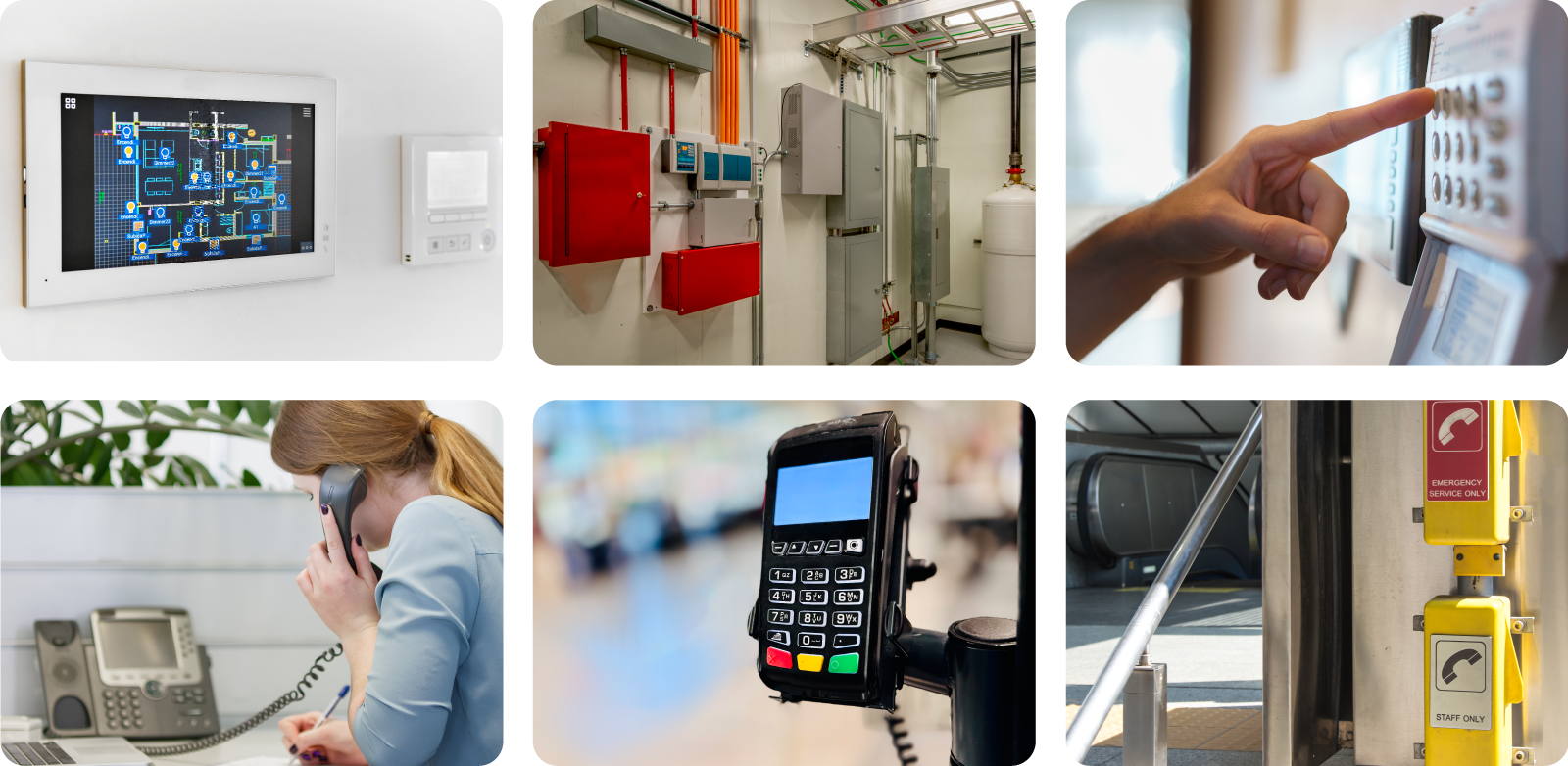
Common Uses for POTS Lines
Though initially designed for voice calls, POTS lines have found essential roles in modern infrastructure, particularly for systems where reliability is non-negotiable.
- Voice telephone service – The original purpose of POTS lines
- Fire alarm monitoring systems – Provide a continuous signal during emergencies
- Elevator emergency phones – Ensures trapped passengers can communicate with help
- Fax machines – Legacy office communication tools
- Security and alarm systems – Monitoring and reporting for safety
- Point-of-sale credit card terminals – Backup communication for transactions
- Emergency call boxes – Public safety and roadside assistance
- Building automation systems – Connects to HVAC, lighting, and security networks
For organizations evaluating upgrades for these systems, learn more about POTS line replacement from INS.
POTS Lines in Networking
While primarily voice-focused, POTS lines have historically integrated into network infrastructure to support hybrid systems and legacy equipment.
- Separation from data networks: POTS lines operate independently from broadband or Ethernet networks
- Hybrid system role: Often used for failover or emergency communication in mixed digital/analog setups
- Legacy connectivity: Many alarm systems, elevators, and industrial devices still depend on analog POTS lines for reliable signaling
Learn how these lines are physically connected: How POTS Lines Work.
Key Characteristics of POTS Phone Lines
POTS lines have unique features that distinguish them from modern telecommunication solutions.
Analog Signal Transmission — Continuous electrical wave for voice
Central Office Power — Operates during local power outages
Dedicated Copper Lines — Point-to-point connectivity ensures reliability
Limited Bandwidth — Voice-grade only (suitable for analog signals)
Resilience — Less susceptible to network outages compared to digital alternatives
These traits make POTS lines indispensable for critical systems requiring high uptime, even as businesses adopt modern networking technologies.
POTS vs. Modern Phone Systems
POTS differs significantly from today’s communication technologies.
| VoIP | VoIP uses internet protocol to transmit voice digitally, often at lower cost and with advanced features. |
| Digital Phone Systems | Enterprise PBXs, SIP phones, and cloud phone systems offer scalability and integration POTS cannot support. |
| Cellular | LTE, 5G, and private wireless networks can carry voice and data without copper lines. |
So, why are businesses moving away from POTS?
- Carriers are retiring copper lines
- Monthly POTS costs continue to increase
- Analog systems lack modern reporting and monitoring
- Replacement parts and technicians are dwindling
Still, POTS is prevalent, and many organizations need time and planning before migrating away.
The Future of POTS Lines
While POTS lines have provided reliable communication for decades, the telecommunications landscape is shifting rapidly. Many carriers have announced the phase-out of traditional copper networks, driven by the high maintenance costs of aging infrastructure, declining usage, and the rise of faster, more flexible digital alternatives. This shift is not just a trend, but a regulatory and operational reality businesses must prepare for.
Why the phase-out is happening:
- Infrastructure aging: Copper lines are susceptible to corrosion, breakage, and signal degradation. Repairing and maintaining these networks is increasingly expensive and time-consuming for carriers.
- Regulatory pressures: The FCC has signaled that legacy copper networks are no longer a priority, incentivizing service providers to migrate customers to modern technologies.
- Digital alternatives: Fiber, VoIP, and cellular systems offer higher speeds, enhanced features, and remote monitoring capabilities that copper simply cannot match.
For organizations that rely on POTS lines to power fire alarms, elevator phones, or emergency call boxes, planning a migration is increasingly important as copper networks are phased out and regulatory expectations evolve, particularly for systems tied to compliance and safety. Early preparation helps keep your systems operational and secure as traditional POTS lines are decommissioned.
Learn more about why POTS lines are being phased out.
FAQs
Is POTS the same as a landline?
Yes. While “landline” is a general term for any wired telephone service, POTS specifically refers to the traditional analog system using copper wires. This distinction matters for critical systems, as POTS lines provide independent power and reliability that many modern digital solutions may lack.
Can you still get POTS lines today?
Some providers still offer POTS service, but availability is declining rapidly due to the ongoing copper network phase-out. Businesses that rely on POTS for alarms, elevators, or security systems should proactively consider replacement services to support regulatory compliance and reduce the risk of service disruption.
What is the difference between POTS and analog?
POTS is a specific type of analog service designed for voice-grade communication. Analog technology can also include other applications, such as audio transmission, but POTS is distinguished by its dedicated point-to-point connection, central office power, and consistent uptime, qualities essential for emergency systems.
Why are they called Plain Old Telephone Service?
The term “Plain Old Telephone Service” was coined in the 1970s as digital telephony and ISDN systems emerged. The acronym emphasizes the simplicity and reliability of traditional analog voice lines, distinguishing them from newer, more complex digital technologies.
Do POTS lines need electricity to operate?
No. POTS lines receive power from the telecom provider’s central office, not the local building. This unique feature makes POTS highly resilient during local power outages, which is why they remain preferred for critical safety systems.
Need to Replace Your POTS Lines?
With POTS lines gradually being retired, businesses must carefully plan a seamless replacement strategy. INS works with organizations to assess existing systems, identify dependencies, and design replacement strategies intended to maintain functionality while modernizing connectivity.
Whether you manage a single facility or multi-site operations, INS provides the resources, expertise, and support to make the transition smooth, predictable, and cost-effective.