The INS Approach to Industrial Wireless Starts With Listening
Lane Wooldridge, Business Development Manager at INS | December 19, 2025
When people think about industrial wireless or private cellular, they often focus first on the technology. They want to jump straight to access points, spectrum, devices, or coverage maps. But after decades in wireless and telecom, I’ve learned that the real work starts long before anyone looks at equipment. It starts with listening.
Before joining INS, I spent years in environments that shaped how I think about building and operating networks. My working life actually started much earlier, when I unexpectedly became a wrangler at a summer camp at 15 years old. That early job taught me that paying attention matters. Listening, reading situations, and understanding people are skills that show up again and again in this field.
Later, I began my professional career in heavy industrial construction with Bechtel, working in refineries and complex industrial facilities. From there, I moved into telecom at PrimeCo, which later became Verizon, where I helped build cell sites, switch buildings, and new network infrastructure as the carrier modernized and expanded. I then spent almost 20 years with Ericsson, supporting network upgrades from 2G through 5G across large deployments, Marco Carrier networks, In-Building solutions, Fixed Wireless, Fiber and Microwave (P2P/P2MP). That range of experience gives me a unique perspective when I sit down with customers today.
That mix of heavy industrial, carrier, and equipment-vendor experience is why, at INS, we approach industrial wireless and private cellular engagements differently: we start with discovery, align IT and OT, and design networks that fit the realities of the plant or field, not just the spec sheet.
Before we talk about solutions, designs, or deployment, we need to understand what the customer is actually experiencing. What is driving the change? What isn’t working? What are they trying to accomplish? If we don’t get that part right, the rest of the project is built on shaky ground. Listening is not a step in the process; for us, it is the foundation.
Understanding the Customer Starts With Understanding Their World
One of the most common issues I run into is confusion about the difference between IT and OT. Many customers use those terms interchangeably, even though the roles, priorities, and pain points can be very different. Some customers describe themselves as IT/OT, but that can still mean they lean heavily in one direction.
If we don’t recognize which perspective they are coming from, we risk missing the mark entirely. An IT-minded customer is focused on security, access control, and data governance. An OT-minded customer is focused on uptime, process continuity, and safety. Both perspectives matter, and each requires a different conversation. Helping customers sort through that is a big part of what we do.
Private Cellular Is Not Wi-Fi, DAS, or a Buzzword
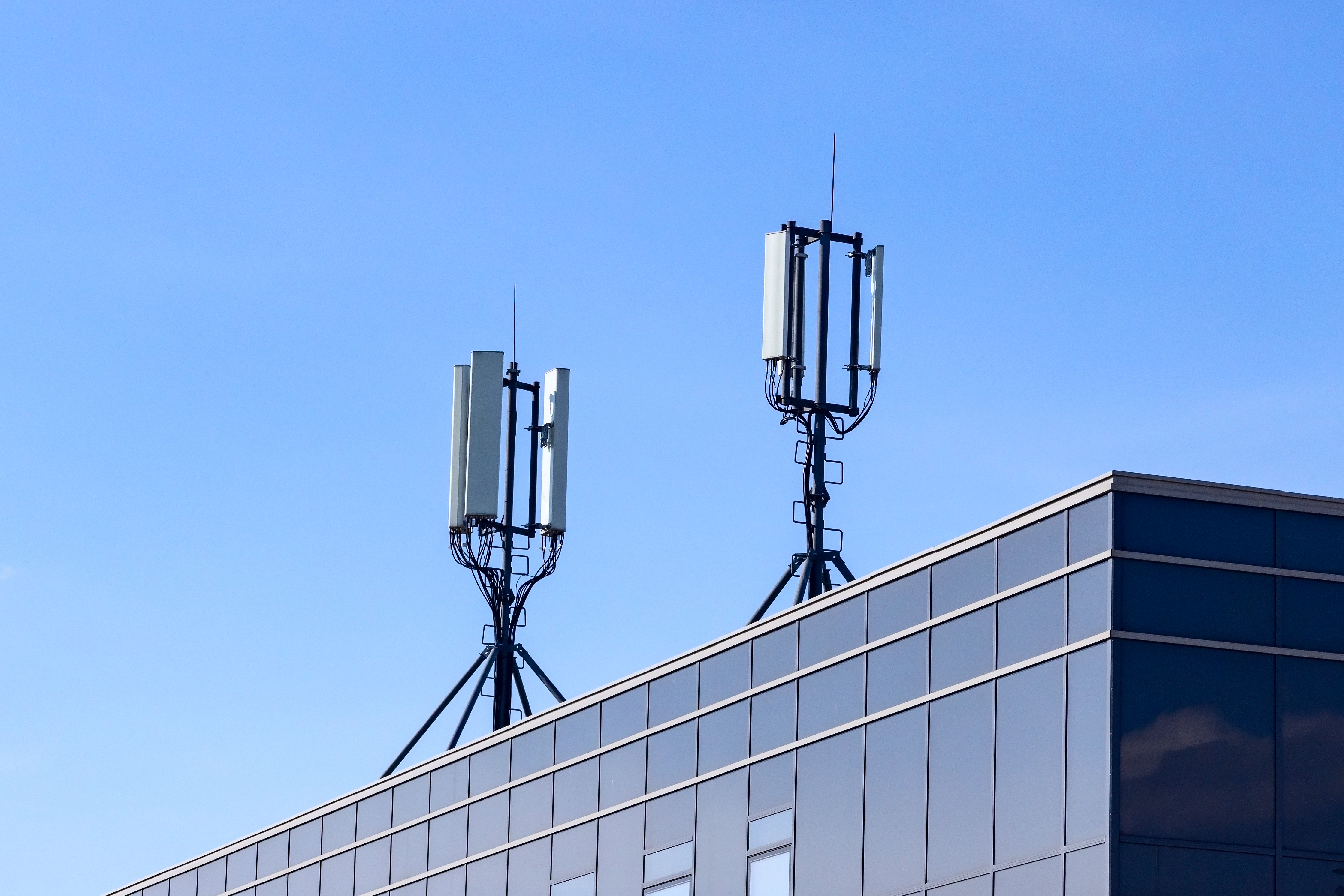 |
Another misconception involves private cellular networks. I see this every week. Customers often assume PCN is just another version of Wi-Fi or a different marketing term for DAS (Distributed Antenna System). In reality, private cellular is a mature, standards-based technology that carriers have used for decades. It is not a Wi-Fi replacement; rather, it is complementary. PCN and Wi-Fi typically work best together. |
A big part of our role is helping customers understand what PCN actually enables: reliable coverage, mobility, industrial-scale capacity, and predictable performance. That requires a real conversation rather than a one-way presentation.
Discovery Is Where Good Networks Begin
If there is one message I reinforce in every early discussion, it is this: do not start by picking a solution. Start by defining the problem and identifying their desired use cases. Understanding HOW they want to use the system is essential. From connectivity to sensors, AGV/AMR controls, and connected worker applications to SCADA systems and network ring expansion and/or redundancy.
Customers need to understand their current state before moving toward a future one. Is the issue capacity, coverage, performance, or device behavior? Are they adding scanners, robotics, AGVs, AMRs, sensors, or new workflows the existing network cannot support? Until we understand the “why,” it is too soon to decide on the “what.”
This is why I prefer working alongside customers during discovery. We sketch options, talk through tradeoffs, compare approaches, and identify the right path together. When customers feel heard and involved, they are not just buying a network; they are helping design one that fits their environment.
Examples From the Field
A few recent engagements show why discovery and planning matter.
A scanner issue that was not a scanner issue
During a proof of concept, a customer’s device would not attach properly to the private cellular system. Everything looked compliant on paper, but the scanner firmware was outdated and the manufacturer had not released an update yet. If we had pulled that exact device into our lab earlier, we would have identified the issue before deployment and saved time.
A refinery starting from scratch
In another case, a refinery had dozens of scanners sitting unused because their connectivity solution system could not reliably support their use. The team had gone back to pen-and-paper for performing regular maintenance rounds and closing our work orders. A previous Wi-Fi estimate they received was more than $1 million, well beyond their budget.
When we introduced private cellular, explained how it worked, and demonstrated coverage, everything changed. Once they saw PCN perform in their environment, they approved deployments at multiple facilities. What changed wasn’t simply the technology. It was the clarity they gained from understanding what the right solution could actually do for their operation.
These examples are not only about technology. They are about understanding where the customer is in their journey. Some are beginning. Others are modernizing or scaling. Our responsibility is to meet them where they are.
What Happens After Deployment
After a successful deployment or even during initial testing, one question comes up more than any other:“What else can we do with this system?”
Once customers see the reliability and performance of private cellular in a challenging environment, they begin imagining what the network can support next. They start thinking about connected workers, inventory automation, sensors, robotics, video, and many other applications.
At that point, connectivity stops being a fix and starts becoming an enabler for the next phase of their operation.
The Future: Networks Designed for AI
Looking ahead, AI will shape how industrial networks are designed, deployed, and managed. Everything from solution planning to predictive maintenance and troubleshooting will need to be AI-enabled, with enough processing power in the right places, whether in the cloud, data center, or at the edge, to handle real-time data and analytics. AI allows operators to extract more insight, efficiency, and value from networks than ever before.
INS is already using AI in our day-to-day work for engineering tasks, automation, accuracy, and reducing manual effort. The pace of change is fast, so staying ahead matters. Networks built today need to be ready not only for current applications, but for the AI capabilities and compute requirements that will be available tomorrow.
Advice for Teams Modernizing Connectivity
 |
Start with dialogue rather than hardware. A real conversation helps uncover the pain points, objectives, and long-term direction that should guide the solution. One of the most helpful questions a customer can answer early is: What does success look like one year from now, and three years from now? |
Once we understand that, the rest becomes much clearer.
Why INS Is Different
Private cellular in industrial environments touches wireless engineering, wired networking, switching, routing, computing, devices, software, and commissioning, and INS brings these competencies together in a single team. We bring that stack into environments like refineries, terminals, warehouses, manufacturing plants, and utilities, where safety, uptime, and coverage are non-negotiable. That combination is what makes solutions work. It is also what shapes our culture, which is collaborative, cross-functional, and centered on solving real customer problems.
A Final Thought: Ask INS
If there is one thing I want people to remember, it is simple: Ask INS.
 |
If it involves a network, whether IT, OT, wireless, wired, private cellular, or the intersection of all of them, ask us. Customers do not need to navigate this alone. INS has the experience, depth, and perspective to help them get where they need to go. And it all starts the same way: by listening. |