
From Static to Strategy: Rewiring a Fleet for Real-Time Communication
How INS Tuned Up Beacon Mobility’s Fleet

Beacon Mobility was facing a problem many fleet operators know all too well: their communication systems had simply aged out of relevance. Their fleet relied on land mobile radios (LMR) running on ninety-hundred megahertz hardware—a patchwork of devices, platforms, and protocols that had been cobbled together over years of growth and acquisitions. Some buses used one system, while newly acquired vehicles relied on completely different setups. No two branches were talking the same language.
Maintaining this legacy LMR network was a draining burden. Replacement parts were scarce, firmware support had expired, and licensing models were growing more expensive with each renewal. Operational procedures varied widely between buses, yards, and departments, forcing fleet managers to improvise workarounds just to keep the system functional. Devices long past their end-of-life were still being pressed into service.
It wasn’t just inconvenient. It was unsustainable. Both operational and capital expenditures were skyrocketing, while the lack of standardization created blind spots in routing, dispatching, safety notifications, and overall coordination. Beacon Mobility was facing a hard truth: staying on the old system wasn’t just costly, it was holding them back.
The Impact: Operations, Productivity, and Costs Were Suffering
Beacon’s problems ran deep:
High Maintenance Costs
The legacy LMR infrastructure required constant investment—licensing renewals, refurbishing outdated hardware, repeated maintenance on towers and repeaters. It was a money pit.
Operational Chaos
Different vehicles and departments had inconsistent configurations, meaning policies couldn’t be enforced, workflows weren’t standardized, and critical information didn’t flow smoothly.
Limited Growth
Without a unified platform, adopting modern safety features, telematics, or automated routing wasn’t possible. Innovation was blocked.
Every day, fleet managers and drivers were forced to work around the limitations of outdated hardware. It was clear that without a comprehensive solution, these issues would only grow worse.
The Urgency: Why Modernization Couldn’t Wait
Modernizing the communication platform was not just a nice-to-have; it was critical for operational excellence and competitive advantage. Across the country, school districts and transportation operators are under pressure to adopt digital tools that improve real-time situational awareness, enable automated compliance reporting, and integrate operational data.
For Beacon Mobility, the stakes were clear: without an updated platform, they were blocked from implementing:
- Safety and emergency alerting systems
- Real-time telematics and fleet tracking
- Routing automation and turn-by-turn navigation
- Compliance-focused reporting
Leadership recognized that continuing to invest in the old LMR system meant escalating costs without any return in capability. A modern, unified solution was the only path forward to reduce expenses, streamline workflows, and unlock new operational opportunities.
The Solution: A Next-Generation Mobile Platform
INS designed and implemented a comprehensive mobile communication system built for scale, flexibility, and security.
- Samsung Galaxy Tablets: Rugged, enterprise-grade devices mounted in purpose-built vehicle docks.
- Verizon Push-to-Talk: Reliable, nationwide data-driven communication for instant connectivity.
- IBM MaaS360 Mobile Device Management: Centralized device control, policy enforcement, and lifecycle management.
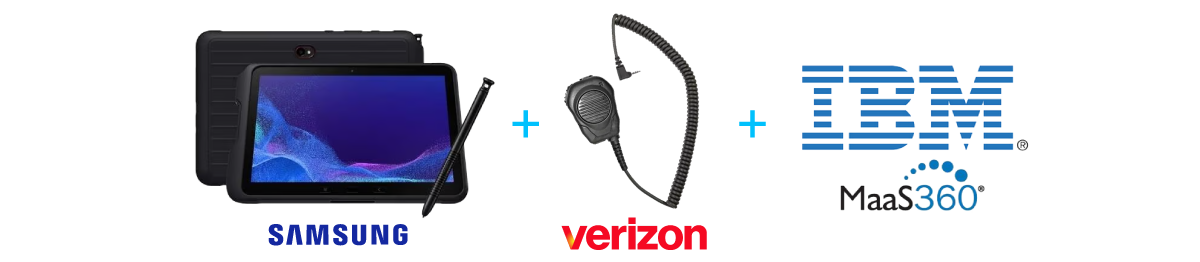
This approach delivered a single interface for drivers, combining communication, safety, telematics, and workflow tools into a streamlined Android platform.
Here’s why this solution stood out:
Enterprise-Scale Manageability
Centrally managed devices allowed IT to enforce policies, control updates, and monitor usage across thousands of vehicles.
Future-Proof Security
Samsung Knox provided robust device-level security, controlling access to applications and ensuring policy compliance.
Financial Efficiency
Moving from hardware-heavy LMR to data-based communication dramatically reduced operational and capital costs.
Scalable Platform
The system could grow and adapt to new operational needs, third-party applications, and emerging features.
See how your fleet can move from static to real-time—schedule a consultation with our team and take the first step toward smarter, safer operations.
A Full-Service, End-to-End Deployment
INS didn’t just hand Beacon Mobility a stack of tablets and call it a day. This was a full-scale, end-to-end transformation, engineered from the ground up to meet the unique challenges of a sprawling, multi-vehicle fleet. Every step of the process was planned, tested, and executed with precision.
The journey began with solution design. INS worked closely with Beacon Mobility to create a custom architecture tailored to the size of the fleet, the variety of vehicle types, and the operational workflows that drivers and dispatchers relied on every day. Once the blueprint was set, the team moved into provisioning and configuration—pre-loading tablets with applications, enforcing security policies, and carefully controlling which sites and tools were accessible, ensuring every device met exact specifications before even leaving the warehouse.
From there, INS handled installation and activation. Tablets were securely mounted in buses, connected to Verizon’s network, and rigorously tested to ensure everything functioned perfectly in real-world conditions. And the support didn’t stop there. Post-deployment services, including lifecycle management, help desk support, and ongoing maintenance, ensured that the system stayed reliable long after installation. The rollout, executed through the Verizon Wireless VAR channel, spanned thousands of devices across a complex fleet, all coordinated seamlessly by INS.
Innovating Communication for Drivers
One of the most transformative aspects of the deployment was the consolidation of every critical tool a driver needed into a single, intuitive application stack. Gone were the days of juggling multiple radios, separate telematics devices, and paper-based workflows. Everything, from dispatch communication to routing, safety checks, and reporting, was now accessible on a single tablet.
This shift fundamentally redefined fleet communication. Operations moved from a hardware-centric model to a software-defined, cloud-managed platform, capable of rapid scaling, future enhancements, and simplified oversight. Distractions were reduced, accountability improved, and workflows streamlined, all while giving drivers a tool they actually enjoyed using.
INS went beyond technology, taking a hands-on approach to understand the reality of Beacon’s operations. Engineers conducted “Day in the Life” sessions, riding along on buses, observing maintenance crews, and seeing firsthand the limitations and frustrations of the old LMR system. This close observation allowed INS to craft a solution that was not only technically sound, but operationally meaningful.
No Bus Left Behind: Conquering Deployment Challenges
Deploying a system of this scale wasn’t without challenges. Early installation hurdles arose from:
- Fleet size and vehicle variability
- Coordinating with multiple departments and vehicle types
- Ensuring each tablet was installed, powered, connected, and registered correctly
INS overcame these through real-time troubleshooting, revised procedures, and close collaboration with Beacon Mobility and Verizon engineering teams. The result was a smooth, fully functional deployment that met every specification.
Results: Modernization, Savings, and Operational Excellence
The impact of the project was dramatic. Beacon Mobility’s outdated LMR systems were replaced with a centralized, digitally enabled communication platform, transforming the way drivers, dispatchers, and leadership collaborated. Drivers quickly embraced the intuitive interface, benefiting from improved audio clarity, streamlined workflows, and consolidated tools.
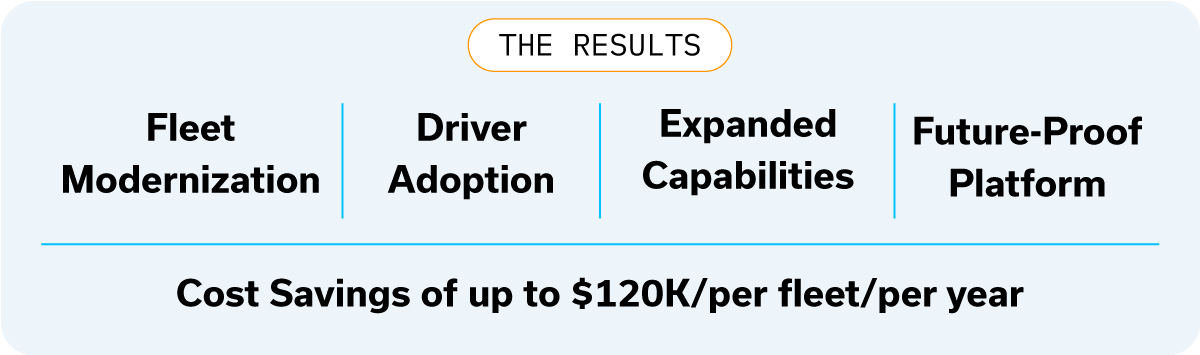
- Fleet Modernization: Legacy LMR systems replaced with a centralized, digital communication platform.
- Driver Adoption: Drivers embraced the intuitive interface, enjoying better audio clarity and consolidated workflows.
- Cost Savings: By replacing hardware-heavy radios, Beacon eliminated recurring $35,000–$120,000 annual costs per fleet in licensing, repeater maintenance, and infrastructure.
- Expanded Capabilities: Real-time tracking, telematics, routing, emergency alerting, and digital inspections became possible.
- Future-Proof Platform: A living system capable of evolving with operational goals and third-party integrations.
This deployment didn’t just improve communication. It transformed operations, giving leadership real-time visibility, faster incident response, improved safety coordination, and a foundation for future innovation.
INS didn’t just deliver devices—we delivered a partnership, a solution, and a vision. By solving complex communication challenges and building trust along the way, INS helped Beacon Mobility align operational excellence with a modern, scalable technology platform. The fleet can now operate with confidence, innovate without constraints, and set the standard for fleet management nationwide.
Ready to modernize your fleet communication? Contact INS today to see how our enterprise mobility solutions can transform your operations.