
Industrial Industry
Refining & Petrochemical
Deterministic, Secure Connectivity for Complex Process-Plant Operations
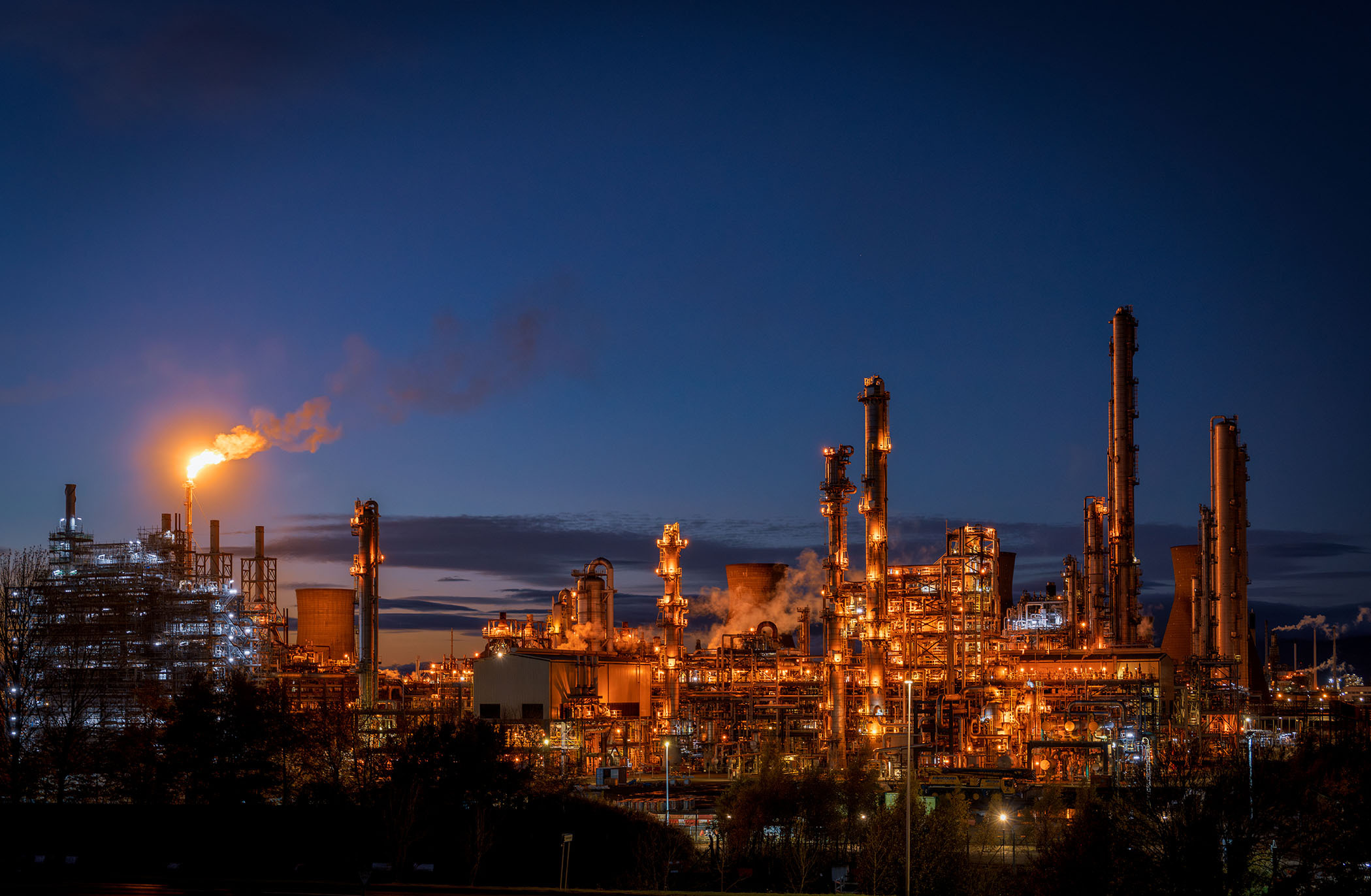
Refining and petrochemical facilities require predictable, low-latency network infrastructure to keep process units stable, maintain safety integrity, support real-time control, and enable modern digital-plant initiatives. Hazardous environments, continuous production cycles, and tightly integrated process systems demand hardened industrial hardware, wired backbones, and secure OT/IT architectures engineered for continuous uptime.
INS designs and supports network architectures purpose-built for process reliability, safe operations, secure data integration, and long-term modernization across refining and petrochemical facilities. We help operators strengthen plant-wide visibility, predictable, time-sensitive communication, update legacy networks, and protect mission-critical control systems.
Key Challenges in Refining & Petrochemical Connectivity
Refinery and petrochemical operations combine high-hazard zones, complex process dependencies, and strict uptime requirements. INS builds communication environments that meet these demands while supporting safe, stable, and continuously monitored production.

Production environments depend on predictable, low-latency communication for advanced process control, DCS/PLC networks, Safety Instrumented Systems (SIS), instrumentation, and plant-wide alarms. Even minor delays can impact process integrity or trigger safety responses.
INS designs wired industrial Ethernet backbones and redundant topologies that support deterministic communication across process units, maintaining stable control and predictable performance in continuous-production environments.
Downstream operators must maintain stable connectivity in areas with explosive atmospheres, corrosive agents, high heat, and safety-critical equipment. Reliable communication is central to:
- Emergency shutdown and SIS devices
- Gas-detection and environmental monitoring
- Fire and life-safety systems
- Perimeter and process-unit monitoring
INS deploys hardened networking platforms capable of supporting continuous safety visibility in hazardous zones.
Digital plant initiatives rely on large volumes of real-time data from IIoT instrumentation, condition-monitoring systems, predictive-maintenance tools, and high-density process analytics. Plants must transport this data reliably between control systems, edge platforms, and plant data centers.
INS designs scalable, high-throughput architectures that support real-time data transport between process units, edge systems, and plant data centers, enabling analytics and modernization without disrupting core process control.
Refineries frequently combine legacy control systems with modern connected platforms, increasing exposure across vendor access points, remote monitoring, cloud integrations, and distributed field devices. INS strengthens cyber resilience through segmented OT networks, secure remote-access workflows, deployment of ruggedized devices, and continuous monitoring that helps safeguard control systems while allowing safe data integration.

Refining and petrochemical facilities rely heavily on wired backbone networks. INS provides:
- Industrial Ethernet backbone design
- Redundant topologies for continuous uptime
- Real-time communication paths for DCS/PLC/SIS
- High-availability core switching layers
- Designs built to meet manufacturing and process-control performance requirements
These wired foundations support stable, predictable operation across process units.
Modern downstream operations depend on analytics and centralized data visibility. INS supports connectivity for:
- IIoT sensor networks
- Digital-twin and simulation platforms
- Data-center and historian integration
- Advanced analytics and condition monitoring
- High-volume instrumentation and data aggregation
This infrastructure enables better decision-making, improved performance, and more efficient turnaround preparation.
Downstream facilities require rugged, secure communication systems. INS delivers hardened architectures with appropriate equipment for hazardous-area classifications, structured segmentation between OT and enterprise networks, and reliable pathways for safety-critical communication. These systems are deployed through structured OT network configuration and installation practices that ensure security is built into the infrastructure without disrupting plant operations.
Refineries undergo frequent turnarounds, debottlenecking projects, capacity expansions, and instrument upgrades. Networks must support temporary equipment, expanded process units, and evolving OT systems. INS designs architectures that scale with modernization efforts, enabling plants to add systems, integrate new analytics workflows, or support temporary field networks without reengineering the entire communication foundation.
Why Choose INS for Your Refining & Petrochemical Network Infrastructure
Refining and petrochemical manufacturers choose INS because we design networks specifically for process-industry environments. INS provides:
Experience supporting refinery and petrochemical connectivity
Engineers skilled in SCADA, DCS, PLCs, instrumentation, and OT cybersecurity
Expertise in deterministic, wired, wireless, and hybrid network design
Lifecycle services covering design, deployment, commissioning, and long-term support
Vendor-neutral integration across diverse process-control systems
Insight drawn from complex industrial environments including energy, utilities, and manufacturing
Refinery & Petrochemical Expertise
Advanced Control Systems Engineering
Deterministic Network Architecture
End-to-End Lifecycle Services
Vendor-Neutral Process Integration
Complex Industrial Insight
INS builds network solutions engineered for reliability, safety, and long-term operational performance.
INS Refining & Petrochemical OT Services customers include:










Talk to Us About Your Refinery & Petrochemical Network Strategy
Whether your priorities include modernizing process-control networks, integrating analytics platforms, strengthening OT cybersecurity, or enabling smart-plant capabilities, INS can design a high-reliability network aligned with your operational goals.